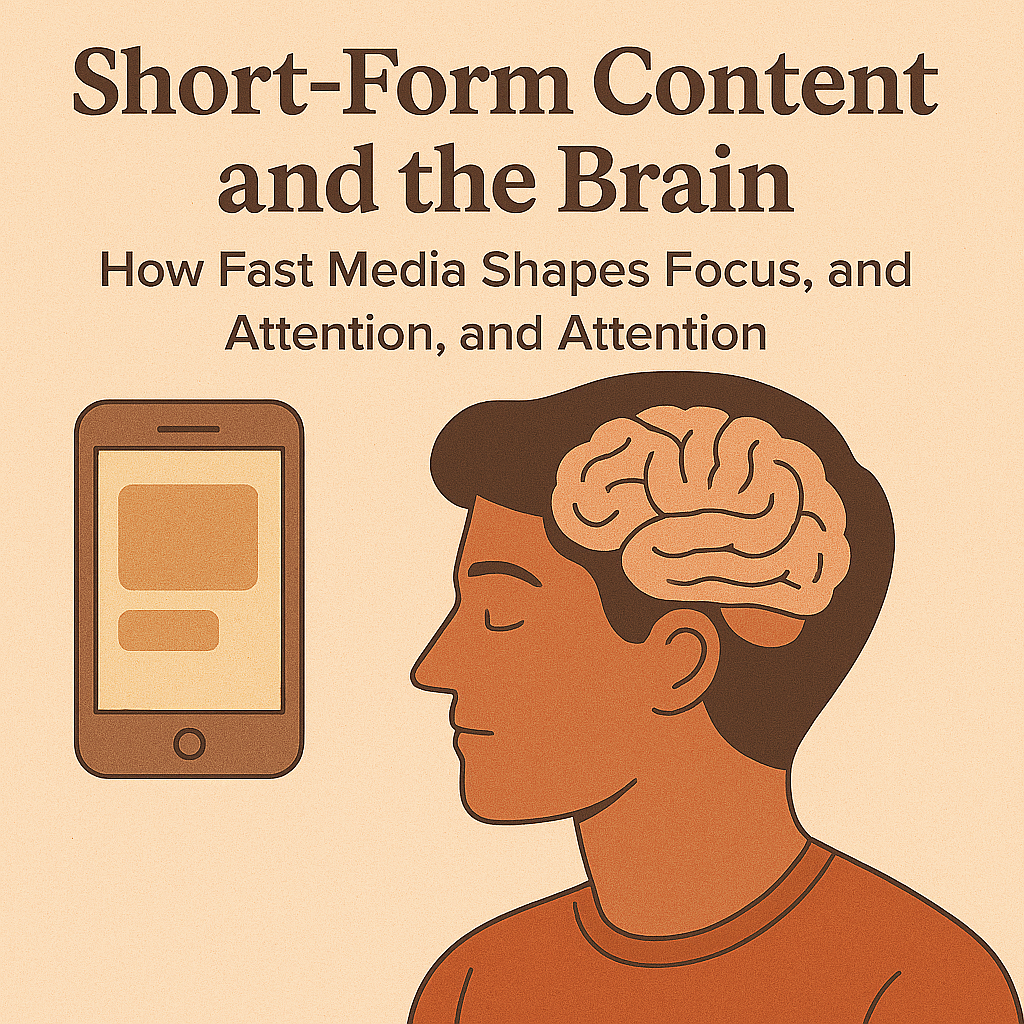
How YouTube Shorts Are Quietly Rewiring Our Attention, Motivation, and Mental Health
Conclusion First:
Short-form content is not harmless entertainment.
It is actively reshaping how the brain processes reward, focus, memory, and emotion.
Platforms like YouTube Shorts, TikTok, and Instagram Reels are optimized for dopamine efficiency, not cognitive depth.
Over time, this changes how we think, how long we can concentrate, and how satisfied we feel with everyday life.
This article explores what short-form content does to the brain, why it feels addictive, how it affects cognition and mental health, and—most importantly—how we can regain control without abandoning technology altogether.
Why Short-Form Content Feels So Irresistible
Short videos are engineered for the brain’s reward system.
They are:
- Fast
- Novel
- Emotional
- Unpredictable
Each swipe promises something new.
That promise is enough to activate dopamine.
Not happiness.
Not meaning.
Just anticipation.
Dopamine and Addiction: The Core Mechanism
What Dopamine Really Does
Dopamine is not the “pleasure chemical.”
It is the motivation and seeking chemical.
It drives:
- Curiosity
- Craving
- Repetition
Short-form content triggers dopamine before you even enjoy the video.
The brain learns to chase the next hit.
This is why you keep scrolling—even when you’re bored.
The “Popcorn Brain” Effect
Neuroscientists describe a phenomenon called “popcorn brain.”
It means:
- The brain expects constant stimulation
- Slower activities feel uncomfortable
- Silence feels empty, not restful
Long-form tasks—reading, studying, deep conversation—start to feel exhausting.
Not because they are harder.
But because the brain has been retrained.
A human brain depicted as a popcorn machine, rapidly popping colorful icons (short videos, notifications, emojis), while deeper areas fade into the background.

Understanding Loneliness: Why Modern Life Creates a Structural Crisis of Connection
Attention Fragmentation and Cognitive Decline
Passive Attention vs. Active Thinking
Short-form videos require passive attention.
You do not:
- Analyze
- Reflect
- Synthesize
You react.
Over time, this reduces activation in the prefrontal cortex, the brain region responsible for:
- Focus
- Planning
- Problem-solving
- Self-control
This does not mean intelligence disappears.
It means cognitive stamina weakens.
The Quiet Power of Kindness: How Small Acts Create a Gentle, Lasting Impact
Why Concentration Feels Harder Than It Used To
Many people report:
- Shorter attention spans
- Difficulty reading long articles
- Inability to focus without background stimulation
This is not personal failure.
It is neuroplastic adaptation.
The brain optimizes for what it practices most.
Memory, Learning, and Shallow Processing
Short-form content encourages:
- Rapid consumption
- Minimal context
- Emotional spikes without integration
This leads to shallow encoding.
Information enters the brain.
But it does not stay.
Learning requires:
- Time
- Repetition
- Reflection
Shorts remove all three.
Mental Health Impacts: Anxiety, Depression, and ADHD-like Symptoms
Emotional Whiplash
Short-form platforms mix:
- Humor
- Fear
- Outrage
- Beauty
- Trauma
- Motivation
All in minutes.
The nervous system does not reset fast enough.
This leads to:
- Emotional dysregulation
- Anxiety
- Numbness
ADHD-like Patterns (Even Without ADHD)
Research shows that excessive short-form consumption can mimic ADHD symptoms, including:
- Impulsivity
- Restlessness
- Difficulty sustaining attention
This does not mean shorts cause ADHD.
But they amplify attentional instability.
A person surrounded by floating short-video screens, emotions rapidly shifting on their face—excitement, anxiety, emptiness—overlapping like glitch effects.

Sleep Deprivation and Daily Life Consequences
Why Shorts Destroy Sleep Quality
Short-form content is:
- Bright
- Fast
- Emotionally activating
It delays melatonin release.
And “just one more video” often becomes thirty.
Sleep loss leads to:
- Poor concentration
- Irritability
- Lower immune function
- Worse emotional regulation
The damage compounds daily.
The Vicious Cycle
Poor sleep → less self-control
Less self-control → more scrolling
More scrolling → worse sleep
The loop reinforces itself.
Why Short-Form Content Is Harder to Quit Than We Expect
This is not about willpower.
Shorts exploit:
- Variable reward schedules
- Infinite scroll
- Algorithmic personalization
The brain cannot predict when the next “good” video appears.
That unpredictability is addictive.
Prevention and Recovery: How to Protect Your Brain
Set Structural Limits (Not Just Intentions)
Willpower fails under fatigue.
Use systems:
- App time limits
- Grayscale mode
- Notifications off
- No-phone zones (bedroom, meals)
Environment shapes behavior more than motivation.
Replace, Don’t Just Remove
The brain needs stimulation.
Replace shorts with:
- Reading (even 10 minutes)
- Walking
- Strength training
- Journaling
- Meditation
These restore dopamine balance, not dopamine spikes.
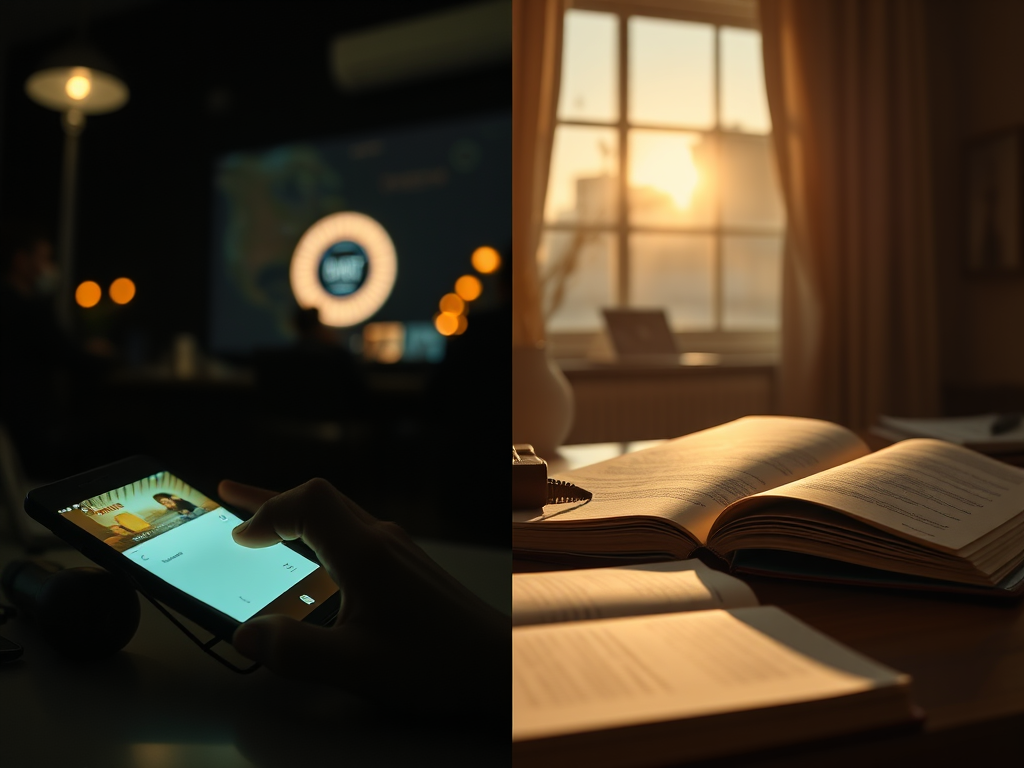
A split image: on one side endless scrolling at night, glowing phone; on the other side a calm morning scene with books, sunlight, and focused activity.
Rebuild Attention Gradually
Attention is trainable.
Start with:
- 5 minutes of deep focus
- No multitasking
- One task only
Increase slowly.
Progress feels boring at first.
That boredom is healing.
When to Seek Professional Help
If you experience:
- Loss of control
- Severe anxiety or depression
- Sleep disruption lasting months
Consult a mental health professional.
Behavioral addiction is real.
Help is not weakness.
Rethinking Technology: It’s Not All Bad
Short-form content is not evil.
It is powerful.
Power requires boundaries.
Used intentionally, short content can:
- Educate
- Inspire
- Connect
Used unconsciously, it consumes attention.
📌 Summary
Short-form content:
- Hijacks dopamine systems
- Weakens sustained attention
- Encourages passive cognition
- Disrupts sleep
- Affects mental health
These effects are gradual but real.
💡 Key Takeaways & Practical Tips
Dopamine drives scrolling, not happiness
Passive consumption weakens focus
Sleep loss magnifies all problems
Limits must be structural, not emotional
Attention can be rebuilt with practice
Final Thought
The greatest cost of short-form content is not time.
It is the loss of mental depth.
Your brain is adaptable.
It can recover.
But only if you decide—consciously—how you feed it.
Stream Your Favorites Faster & Better! 📺
Why wait? Upgrade to Amazon Fire TV and enjoy lightning-fast streaming and thousands of apps at your fingertips. It’s time to level up your TV game! 🚀
Leave a Reply