Introduction
As 2025 draws to a close, you’re probably feeling the pull between two opposing forces: the pressure to finish strong and the exhaustion of twelve months behind you. There’s something uniquely reflective about late December. The holiday lights, the countdown to midnight, the inevitable question from well-meaning relatives: “So, how was your year?”
For most of us, that question triggers a mental scramble. Was it good? Was it productive? Did I accomplish what I set out to do in January? The truth is, without intentional reflection, the entire year can blur into a collection of deadlines met, challenges survived, and moments that slipped by too quickly.
Here’s what research tells us: People who conduct regular annual reviews are 42% more likely to achieve their goals the following year compared to those who don’t. They report higher life satisfaction, clearer priorities, and better decision-making abilities.
This isn’t about perfection or productivity culture. It’s about pausing long enough to understand what happened, what it meant, and where you want to go next. This comprehensive guide will walk you through a proven framework for reviewing your 2025 with honesty, compassion, and clarity.
Why Year-End Reflection Matters More Than You Think
Before we dive into the how, let’s address the why. In our achievement-obsessed culture, reflection can feel like wasted time. You could be doing something, not just thinking about things you’ve already done.
But here’s the paradox: Reflection is action. It’s one of the highest-leverage activities you can engage in.
The benefits of structured year-end reflection:
Pattern Recognition: You’ll spot recurring themes, behaviors, and circumstances that you miss when you’re moving too fast. Maybe you thrive in collaborative projects. Maybe you consistently overcommit in spring. These patterns are gold for future planning.
Emotional Processing: 2025 brought victories and losses, joy and grief, breakthroughs and setbacks. Reflection creates space to acknowledge all of it, not just the highlight reel you post on social media.
Accurate Self-Assessment: We’re terrible at remembering our own lives. Studies show that people systematically overestimate their productivity while underestimating their progress. Reflection corrects these cognitive biases.
Intentional Forward Movement: When you understand where you’ve been, you can make deliberate choices about where you’re going. Random drift becomes purposeful direction.
Gratitude and Closure: There’s something psychologically powerful about completing a chapter. Reflection provides that closure and creates space for what’s next.
The Complete Year-End Reflection Framework
This isn’t a quick journaling exercise. Set aside 2-4 hours over the next two weeks. Grab your calendar, journal, photos, and any goal-setting documents from January 2025. Make tea. Turn off notifications. This is important work.
Step 1: Data Collection Before Emotion
Start with facts before feelings. Your memory is unreliable, so gather evidence first.
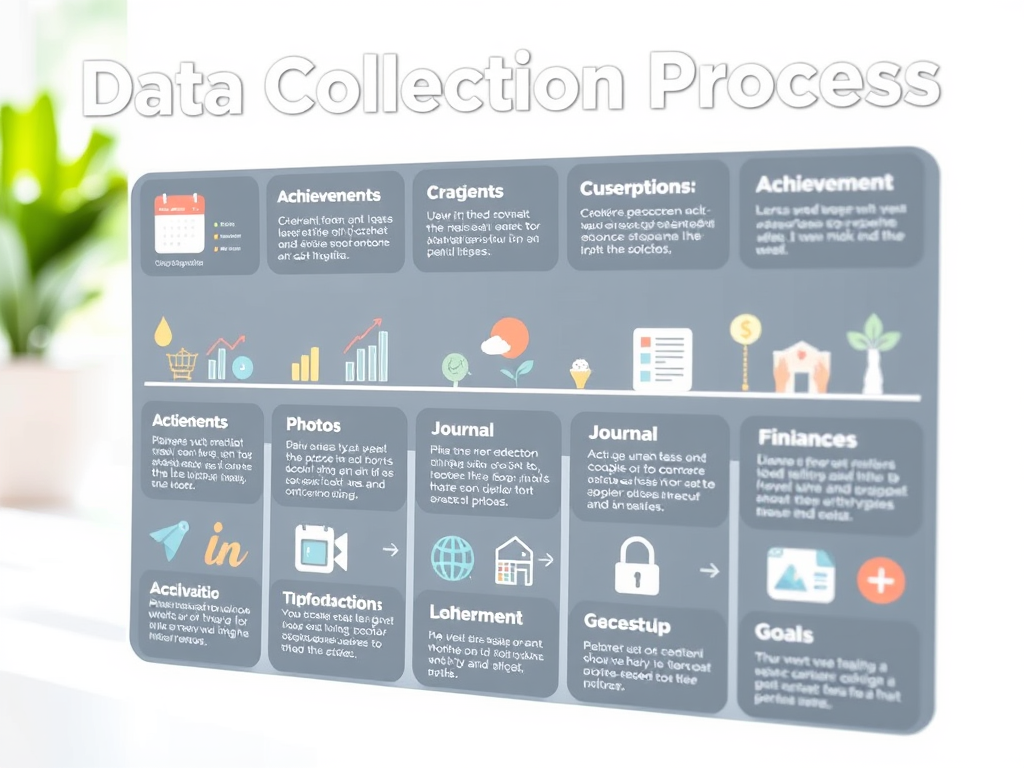
Review your calendar: Go through month by month. What were the major events? Travel? Projects? Life changes?
Check your achievements list: What did you actually accomplish? Be specific. “Finished quarterly reports” counts. “Survived a difficult season” absolutely counts.
Look at your photos: Your camera roll tells a story your memory might have forgotten. What were you doing? Who were you with? What brought you joy?
Read old journal entries: If you journal, skim entries from throughout the year. What were you worried about in February? Excited about in July? Struggling with in October?
Review your finances: Money tells a truth story. Where did you invest your resources? What did you value enough to spend on?
Check your goals from January: If you set New Year’s resolutions or goals, dig them up. No judgment yet, just observation.
Pro tip: Create a simple month-by-month timeline as you do this. Just bullet points of major events, accomplishments, and challenges.
Step 2: The Five Essential Reflection Questions
Now that you have data, it’s time for interpretation. Work through these five questions with honesty and self-compassion.
Question 1: What Were My Biggest Wins This Year?
List at least 10 accomplishments from 2025, big and small. Include:
- Professional achievements
- Personal growth moments
- Relationship milestones
- Health victories
- Creative projects
- Challenges overcome
- New skills learned
Don’t minimize. “I kept showing up” is a legitimate win if the year was hard. “I asked for help” can be a breakthrough if you’re someone who struggles with that.
Reflection prompt: Which of these wins am I most proud of? Why? What does that tell me about my values?
Question 2: What Were My Biggest Challenges and What Did They Teach Me?
List the 5-7 most difficult experiences of your year. For each one, ask:
- What made this hard?
- How did I respond?
- What did I learn about myself?
- What would I do differently with the same situation now?
- Is there still unfinished business or healing needed?
Important: This isn’t about blame or shame. Challenges reveal character and teach lessons. Even mistakes contain wisdom.
Reflection prompt: Looking back, which difficulty became a doorway to something better? Which one still needs attention?
AI Is Not Replacing Humans — It’s Replacing Bad Systems
Question 3: How Did I Grow as a Person This Year?
Growth isn’t always loud or obvious. Consider:
- What beliefs did I change?
- What fears did I face?
- What boundaries did I set?
- What unhealthy patterns did I break?
- What new capacities did I develop?
- How am I different from the person I was on January 1, 2025?

Reflection prompt: If January-me could see December-me, what would surprise them most?
Question 4: What Drained My Energy and What Energized Me?
Make two lists:
Energy Drains: Activities, relationships, commitments, or circumstances that consistently left you depleted.
Energy Sources: What made you feel alive, engaged, and resourced? When did time fly? When did you feel most yourself?
Reflection prompt: How can I do less of the draining stuff and more of the energizing stuff in 2026? What’s actually within my control to change?
Question 5: What Am I Grateful For From This Year?
Gratitude isn’t toxic positivity. It’s noticing gifts, even in difficult years. List at least 20 things you’re thankful for from 2025:
- People who showed up for you
- Opportunities that came your way
- Beauty you experienced
- Lessons that shaped you
- Ordinary comforts you might take for granted
- Moments of joy, connection, or peace
Reflection prompt: What grace did I receive that I didn’t earn or deserve? How has my life been supported by forces beyond my control?
Step 3: Category-Specific Deep Dives
Now zoom into specific life areas. You don’t have to do all of these, but pick the 3-4 most important to you.
Career and Professional Life
- What were my major professional accomplishments?
- What skills did I develop or strengthen?
- What was my relationship with work like? Healthy? Sustainable?
- Did I grow in leadership, collaboration, or expertise?
- What opportunities did I pursue or pass on?
- How did I handle professional setbacks or disappointments?
- Am I moving toward or away from meaningful work?
Relationships and Community
- Which relationships deepened this year?
- Which relationships ended or changed significantly?
- How did I show up for the people I love?
- Where did I struggle in relationships? What patterns do I notice?
- Did I make new meaningful connections?
- How did I balance solitude and community?
- Did I set healthy boundaries or did I overextend?
Physical and Mental Health
- How did I treat my body this year?
- What was my relationship with exercise, sleep, and nutrition?
- How did I manage stress and mental health?
- Did I address health issues or ignore warning signs?
- What brought me peace? What created anxiety?
- Did I develop any health-supporting habits?
Financial Wellness
- Did I live within my means or accumulate debt?
- What were my major expenses? Do they align with my values?
- Did I make progress toward financial goals?
- How do I feel about my relationship with money?
- Did I invest in my future? Save? Give generously?
Personal Growth and Creativity
- What did I create this year?
- What did I learn?
- What books, podcasts, or courses shaped my thinking?
- Did I pursue hobbies and interests outside of work?
- When did I feel most creative or engaged?
- What risks did I take in pursuit of growth?
Step 4: The Goal Review (Without Shame)
Now it’s time to revisit those January goals. But we’re doing this without self-judgment.
For each goal you set:
Achieved: Great! What enabled your success? How did it feel?
Partially Achieved: What progress did you make? What got in the way of full completion? Is this still important?
Not Achieved: Why not? Was the goal unrealistic? Did priorities shift? Did obstacles arise? Is there wisdom in the not-doing?
No Longer Relevant: Some goals die because they should. What changed? What did you learn?
Important insight: Research shows that only about 8% of people achieve all their New Year’s goals. You’re not a failure if you didn’t check every box. Goals are directional tools, not moral imperatives.
Ask yourself: Were my goals actually my own, or were they borrowed from cultural expectations, social media, or someone else’s values?

Step 5: Integration and Meaning-Making
You’ve collected data and answered hard questions. Now step back and look for the story of your year.
Try this exercise: If 2025 were a book, what would you title it? What would be the major plot points? Who are the supporting characters? What’s the theme?
Some years are about building. Some are about surviving. Some are about letting go. Some are about becoming. There’s no right answer.
Write a letter to yourself: Summarize what you want to remember about 2025. Be kind. Be honest. Include:
- What you’re proud of
- What you learned
- What you’re leaving behind
- What you’re carrying forward
This letter becomes a time capsule. You’ll treasure it when you read it in future years.
Common Reflection Pitfalls to Avoid
The Comparison Trap: Your year measured against someone else’s highlight reel is a recipe for misery. Your only meaningful comparison is to yourself 12 months ago.
The Productivity Obsession: A good year isn’t measured solely by output. Rest, healing, and simply enduring count as worthy uses of your time.
The Negativity Spiral: If your reflection becomes an exercise in self-criticism, you’re doing it wrong. Notice what didn’t go well, but balance it with what did.
The Amnesia Effect: Don’t skip the data-gathering step. You’ll forget 80% of your year if you rely only on memory.
The Perfection Paralysis: You don’t need the perfect journaling setup or aesthetic reflection practice. Messy notes work just fine.
After Reflection: What to Do With Your Insights
Reflection without action is just nostalgia. Here’s how to use what you’ve learned:
Identify 1-3 key insights: What are the most important things you learned about yourself, your life, or your priorities?
Name what needs to change: Based on your energy audit and goal review, what needs to stop, start, or continue?
Create closure rituals: Write a gratitude letter to someone who impacted your year. Delete old files. Donate items you no longer need. Mark the transition.
Set intentions (not just goals) for 2026: We’ll save detailed goal-setting for January, but based on your reflection, what do you want to be true about your next year?
Share selectively: Tell someone you trust about your insights. Articulating reflection deepens it.
Final Thoughts: The Gift of Looking Back
In a culture obsessed with forward motion, reflection is a countercultural act. It says: What happened matters. I matter. My experience is worth examining.
2025 happened to you and through you and with you. It shaped you whether you noticed or not. Reflection is simply the practice of noticing.
Some years are objectively harder than others. Some are marked by loss, struggle, or disappointment. Reflection doesn’t make those things disappear. But it does create space for them to be integrated into your story instead of just endured.
And some years are quietly good. Full of ordinary moments that felt insignificant at the time but, in retrospect, were everything. Reflection rescues those moments from oblivion.
So before you race into 2026 with new plans and fresh goals, pause. Look back. Bear witness to your own life.
You made it through another year. That’s worth honoring.
Your Reflection Starter Kit: Quick Reference
If you only have 30 minutes:
- List 10 wins from 2025
- List 5 lessons learned
- List 10 things you’re grateful for
- Write one paragraph about what you want to remember
If you have 2 hours:
- Do the full Five Essential Questions
- Review your calendar and goals
- Pick 2 life categories for deep dive
- Write your letter to yourself
If you have 4+ hours:
- Complete the entire framework
- Include creative elements (photo collage, timeline, vision boarding)
- Share your insights with someone you trust
- Begin thinking about 2026 intentions
What’s your biggest insight from 2025 so far? Share in the comments below and let’s reflect together.
Discover more future‑ready skills in the Career Evolution & Skills Hub
“Home Office Essentials for Productivity: Items That Truly Make a Difference
It’s never too late to learn, grow, and discover new possibilities.
Explore the books of Han Jong-Woo, where artificial intelligence, lifelong learning, personal growth, and meaningful living come together to inspire your next chapter.
Whether you’re curious about AI, seeking purpose, or simply looking for fresh inspiration, you’ll find books designed to encourage, empower, and enrich your life.
▶ Visit JongWoo Han’s Amazon Author Page and discover all of his books today.
Leave a Reply