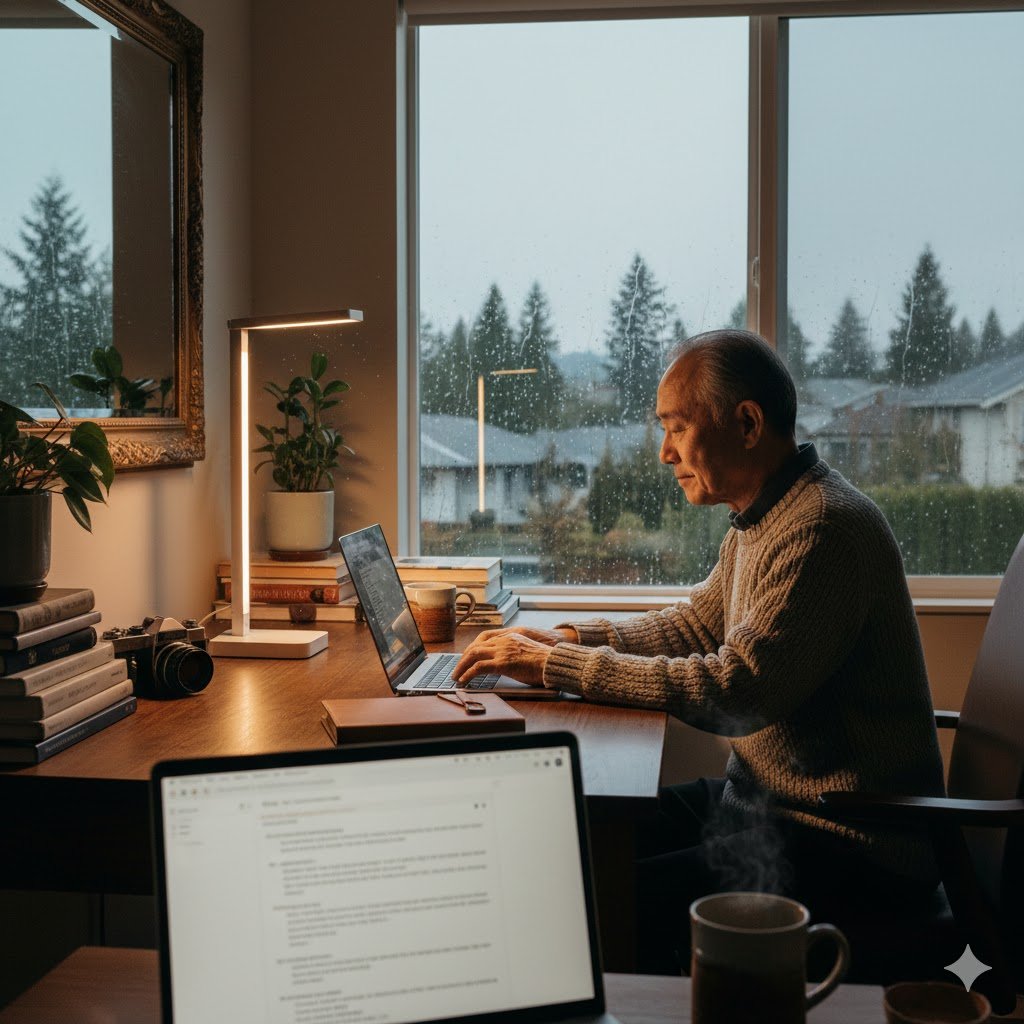
“Winter in Vancouver, Canada, is notoriously rainy and the skies are often grey and overcast. My study, in particular, has a small window that keeps the room dim and gloomy even during the day. At 71 years old, spending the entire day in front of a laptop writing blog posts has started to take a toll on my eyes, and I found myself getting fatigued much faster.
That’s why I decided to take matters into my own hands. After some research and personal trial, I’ve found a way to transform my dark workspace into a sun-filled sanctuary. Today, I’m excited to share my **3-Step Secret to Turning a Dark Room into a Bright, Sunlit Office.**
Target Audience: Busy professionals, remote workers, and anyone struggling with a dark, windowless workspace.
✨ Executive Summary: The 3-Step Fix
Working in a room without natural light can drain your energy and hurt your focus. The fix is simpler than you think. You don’t need expensive renovations; you need a strategic lighting plan that mimics the sun.
Your Action Plan:
- Use 5000K-6500K Bulbs: Mimic bright daylight (high energy).
- Add a Vertical Light Source: Create the illusion of a ‘fake window.’
- Implement a Circadian Rhythm Schedule: Shift your lighting color temperature throughout the day for better sleep.
☀️ Part 1. Why Your Windowless Office is Draining You
A lack of natural light is more than just dimness. It directly impacts your health and productivity. Understanding the problem is the first step to fixing it.
📉 The Science of Light and Energy
- Circadian Rhythm Disruption: Our internal clock relies on light cues. No daylight means your brain struggles to tell the difference between ‘wake up’ and ‘sleep.’
- Melatonin Confusion: Blue light suppresses melatonin (the sleep hormone). Lack of morning blue light means sluggish mornings. Too much blue light at night causes insomnia.
- Vitamin D Deficiency: While lights don’t provide Vitamin D, the feeling of being indoors all day often coincides with low levels. Light fixes the mood, not the nutrient.
- Seasonal Affective Disorder (SAD): Even without clinical SAD, indoor workers can experience low mood from chronic darkness.
🛠️ Part 2. The Lighting Strategy: Mimicking Daylight
Your goal is to trick your body into thinking it’s near a large window. This requires layering different light sources.
1. The Right Color Temperature (CCT) is Key
Color temperature (measured in Kelvin, K) is the single most important factor.
- The Morning/Day Fix (5000K – 6500K): Use bulbs in this range. This is true ‘Daylight White.’ It is bright, blue-rich light that signals alertness and high energy.
- The Evening Wind-Down (2700K – 3000K): After 5 PM, switch to soft ‘Warm White.’ This yellow-orange light signals to your body that night is coming.
2. Layer Your Light Sources
Never rely on a single overhead light. You need at least three layers.
- Ambient Light (The Ceiling): Install fixtures that point up at the ceiling. Reflected light mimics a wider window source. Use 5000K bulbs here.
- Task Light (The Desk): Use a high-quality desk lamp that provides focused light directly onto your work area. This prevents eye strain.
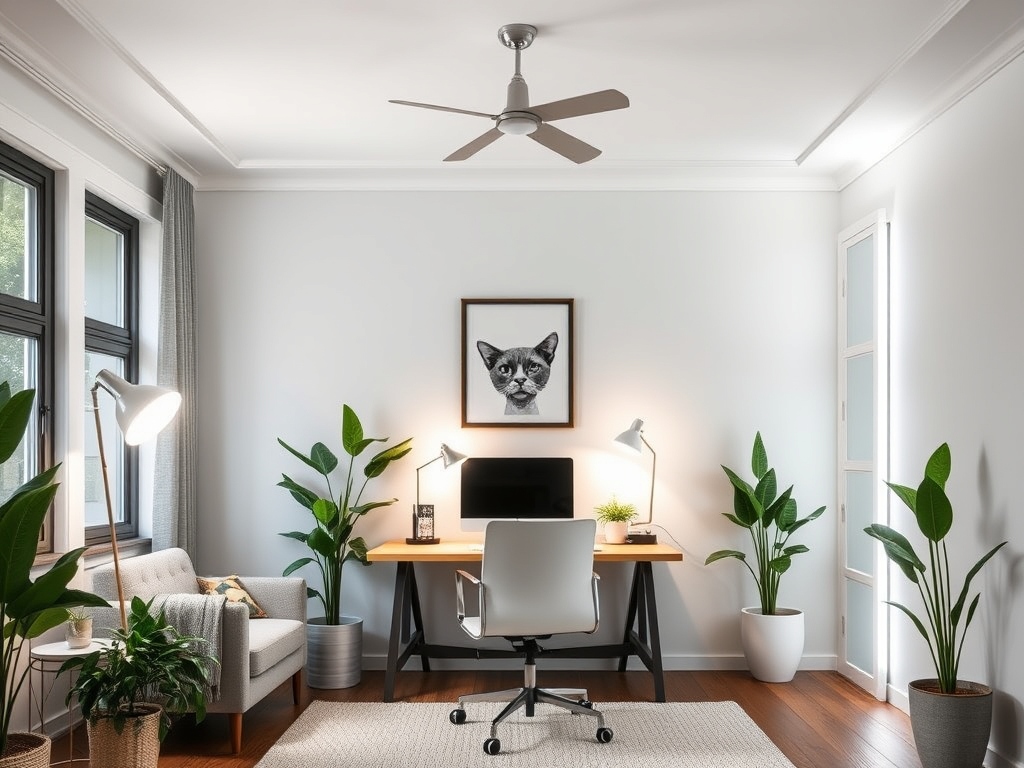
- Accent/Vertical Light (The Fake Window): Place a slim floor lamp or a light panel directly against a wall corner. Point it up or use a vertical strip of light to simulate a large, tall window.
3. Embrace Smart Lights (The Circadian Solution)
Smart bulbs (like Philips Hue or Kasa) are an office worker’s best friend.
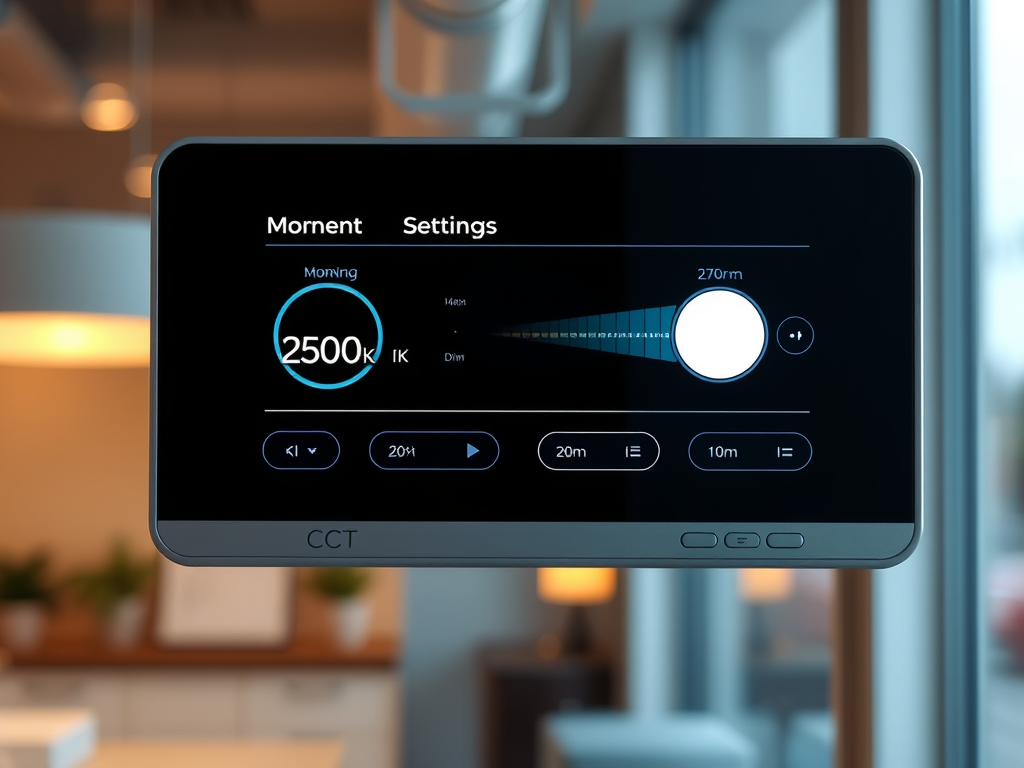
- Automation is Essential: Set them to automatically shift CCT (Color Correlated Temperature) throughout the day.
- Morning (7 AM – 9 AM): Max brightness (6500K) to signal ‘wake up.’
- Afternoon (1 PM – 3 PM): Maintain high CCT, but slightly dim the intensity to prevent mid-day burnout.
- Evening (5 PM – 7 PM): Automatically transition down to warm white (2700K) and lower intensity.
🌟 Part 3. Quick Fixes and Ergonomics
These simple additions optimize your workspace and well-being.
1. Use Mirrors Strategically
- Place a large mirror on the wall perpendicular to where a window should be.
- The mirror reflects light from your fixtures, increasing the overall brightness and depth of the room. It feels much larger.
2. Paint the Walls Right
- Avoid: Dark colors, shiny finishes. Dark colors absorb light, making the room feel smaller and dimmer.
- Choose: Matte white, or very pale, cool colors (e.g., light gray, pale blue). These maximize light reflection.
3. Consider an Outdoor Desk Lamp
- Find a desk lamp with a high CRI (Color Rendering Index) of 90 or above. This measures how accurately light reflects true colors, reducing eye fatigue.
✅ Summary & Key Takeaways
📌 Summary
You can turn your dark office into an energetic workspace by intentionally designing light to replace sunlight. Focus on high color temperature (5000K+) during the day and automate the shift to warm light (2700K) in the evening to protect your sleep.
⭐ Core Action Tips
- Buy 5000K Bulbs Today: Swap out any existing soft-white bulbs immediately.
- Set a Sunset Automation: If you use smart lights, ensure the color temperature automatically drops around 5 PM.
- Add a Mirror: Place the largest mirror you can afford on the biggest wall to maximize reflected light and room depth.
Which of these lighting strategies will you implement first to boost your WFH productivity? Share your darkest office hacks in the comments below!
<< You Might Also Like >>
“Korea’s Secret Winter Escapes: Hidden Gems Beyond Seoul”
How a Small Act of Kindness Can Save a Caregiver’s Day
Stream Your Favorites Faster & Better! 📺
Why wait? Upgrade to Amazon Fire TV and enjoy lightning-fast streaming and thousands of apps at your fingertips. It’s time to level up your TV game! 🚀
Leave a Reply