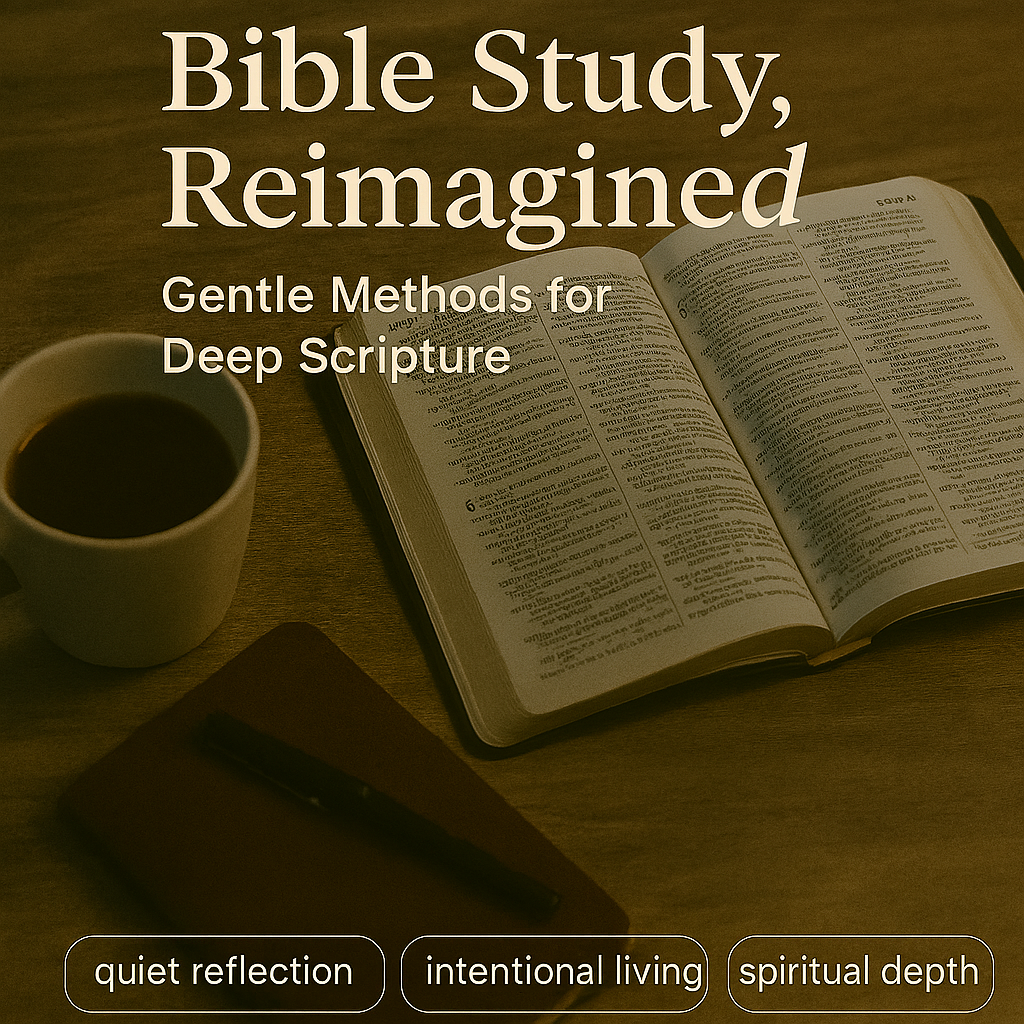
A Clear, Structured, and Life-Changing Approach to Understanding the Bible
Conclusion first:
Effective Bible study is not about reading more verses.
It is about understanding context, identifying themes, asking the right questions, and applying Scripture consistently to daily life.
People who gain deep insight from the Bible do not rely on emotion alone.
They use methodical, repeatable study techniques.
This guide explains how to study Scripture clearly, accurately, and meaningfully, even if you are not a theologian.
Why Most People Struggle With Bible Study
Reading Is Not the Same as Studying
Many people:
- Read random verses
- Jump between books
- Focus only on inspirational lines
This leads to:
- Confusion
- Contradictions
- Shallow understanding
The Bible is not a collection of quotes.
It is a unified message.
The Bible Was Written For Us, Not To Us
Scripture was written:
- In different languages
- In ancient cultures
- To specific audiences
Without context, meaning is distorted.
Good study asks:
- Who wrote this?
- To whom?
- Why?
- Under what circumstances?
“Sleep Better Tonight: Science‑Backed Habits for Deep Rest”
The Core Principle of Effective Bible Study
Scripture Interprets Scripture
The Bible explains itself.
Key rule:
Never isolate a verse from its context.
Instead:
- Compare related passages
- Identify consistent themes
- Let clearer verses explain difficult ones
This prevents personal bias.
A Step-by-Step Bible Study Framework
This framework works for:
- Beginners
- Long-time readers
- Personal or group study
Step 1: Choose a Bible Translation Wisely
Accuracy Over Style
Readable translations help understanding.
Word-for-word accuracy preserves meaning.
Best practice:
- Use one main translation
- Compare with another when needed
Avoid paraphrases as primary study tools.
Step 2: Start With the Big Picture
Always Begin With Context
Before reading details, ask:
- What book is this?
- Is it history, prophecy, poetry, or letters?
- What is the main theme?
Understanding structure prevents misinterpretation.

“Person studying the Bible at a desk with maps, timeline charts, and open notebooks, calm lighting, realistic style”
Book-Level Reading First
Read the entire book:
- Without stopping
- Without commentary
Goal:
- Understand flow
- Identify repeated ideas
Details come later.
Mastering Calm: Yoga & Meditation for Modern Stress
Step 3: Identify the Central Theme
The Bible Has One Unified Message
Across all books, Scripture addresses:
- God’s purpose
- Human responsibility
- Restoration and hope
Every passage supports the larger narrative.
Ask:
- What does this passage reveal about God?
- What does it teach about human behavior?
Step 4: Observe the Text Carefully
Slow Reading Changes Everything
Observation means:
- Reading slowly
- Repeating key verses
- Noticing patterns
Look for:
- Repeated words
- Cause and effect
- Commands and promises
Ask Observation Questions
- Who is speaking?
- Who is listening?
- What problem is addressed?
- What solution is offered?
The text answers these questions.

“Close-up of Bible text with handwritten notes, underlines, and question marks in the margins, study-focused atmosphere”
Step 5: Compare Related Scriptures
Cross-Referencing Is Essential
The Bible explains itself through:
- Parallel accounts
- Repeated teachings
- Prophecy and fulfillment
Use:
- Footnotes
- Cross-reference systems
Never rely on a single verse for doctrine.
Harmony Over Contradiction
If verses appear to conflict:
- Re-check context
- Compare translations
- Look for complementary meaning
True understanding brings harmony.
Living Longer Isn’t Enough — We Need to Live Better
Step 6: Understand Historical and Cultural Background
Culture Shapes Meaning
Customs affect interpretation:
- Family structure
- Legal practices
- Social norms
Understanding background:
- Clarifies metaphors
- Prevents modern assumptions
Use Reliable Study Aids
Helpful tools:
- Bible dictionaries
- Historical timelines
- Maps
Avoid speculative sources.

“Ancient Bible lands map beside an open Bible, warm tones, educational illustration style”
Step 7: Analyze Key Words and Phrases
Words Carry Weight
Important terms often:
- Appear repeatedly
- Define core teachings
Compare how the same word is used elsewhere.
Do not force meanings.
Let Scripture define terms.
Step 8: Meditate on Meaning, Not Emotion
Meditation Is Focused Thinking
Biblical meditation is:
- Active
- Thoughtful
- Purposeful
It involves:
- Reflecting on meaning
- Considering implications
- Asking how principles apply
Not emotional visualization.
Step 9: Apply Scripture Practically
Knowledge Without Application Is Incomplete
Ask:
- What principle is taught?
- How does this affect decisions?
- What attitude needs adjustment?
Application is:
- Personal
- Ethical
- Consistent

“Person journaling reflections after Bible study, peaceful morning light, minimalistic setting”
Step 10: Maintain a Consistent Study Routine
Consistency Builds Understanding
Better than long sessions:
- Short daily study
- Regular schedule
Recommended:
- Same time
- Same place
- Clear objective
Routine creates momentum.
Effective Bible Study Methods Explained
Topical Study
Focus on one subject:
- Faith
- Hope
- Love
- Prayer
Collect all relevant passages.
Book-by-Book Study
Best for depth:
- Understand flow
- Identify author’s intent
Recommended for long-term growth.
Character Study
Examine:
- Choices
- Consequences
- Faithfulness
Learn from real examples.
Common Bible Study Mistakes to Avoid
Proof-Texting
Never:
- Select verses to support opinions
- Ignore context
Truth stands on consistency.
Relying Only on Secondary Sources
Commentaries help.
They do not replace Scripture.
Always return to the text.
Studying Alone vs Studying With Others
Personal Study
Builds:
- Discipline
- Personal conviction
Group Study
Provides:
- Perspective
- Balance
- Accountability
How Long Does Effective Bible Study Take?
Quality matters more than length.
Even:
- 20–30 minutes
- Daily
Produces strong results over time.
Benefits of Structured Bible Study
- Clear understanding
- Strong faith foundation
- Reduced confusion
- Practical wisdom
Truth brings confidence.
Summary
Effective Bible study is:
- Structured
- Context-driven
- Scripture-centered
- Application-focused
It does not depend on talent.
It depends on method.
Key Tips to Remember
- Context always comes first
- Scripture explains Scripture
- Observe before interpreting
- Apply principles consistently
- Study regularly, not randomly
For more ideas to support a balanced and intentional life, explore the full Health & Wellness Hub.
<< You Might Also Like >>
“Sleep Better Tonight: Science‑Backed Habits for Deep Rest”
“Intermittent Fasting: A Gentle Reset for Body and Mind”
“The Most Profitable Keywords in Finance & Insurance”
It’s never too late to learn, grow, and discover new possibilities.
Explore the books of Han Jong-Woo, where artificial intelligence, lifelong learning, personal growth, and meaningful living come together to inspire your next chapter.
Whether you’re curious about AI, seeking purpose, or simply looking for fresh inspiration, you’ll find books designed to encourage, empower, and enrich your life.
▶ Visit Han Jong-Woo’s Amazon Author Page and discover all of his books today.
Leave a Reply